In some restaurants, the waiter is an essential part of the experience. In others, the waiter is primarily an extra link between the customer and the kitchen.
The difference becomes clear at an airport, in a busy lunch restaurant or in a fast-casual concept. Here, customers often want a clear menu, an accurate order, a realistic waiting time and quick payment. If they first have to wait for attention, then wait to order and finally wait for the bill, traditional table service is not necessarily good service.
The question, then, is not whether technology is better than people. It is:
Which tasks do customers genuinely need a person to handle?
Self-service can be good service
Restaurant self-service takes several forms:
- Ordering and payment at the bar
- QR ordering from the table
- Self-service kiosks
- Mobile ordering before arrival
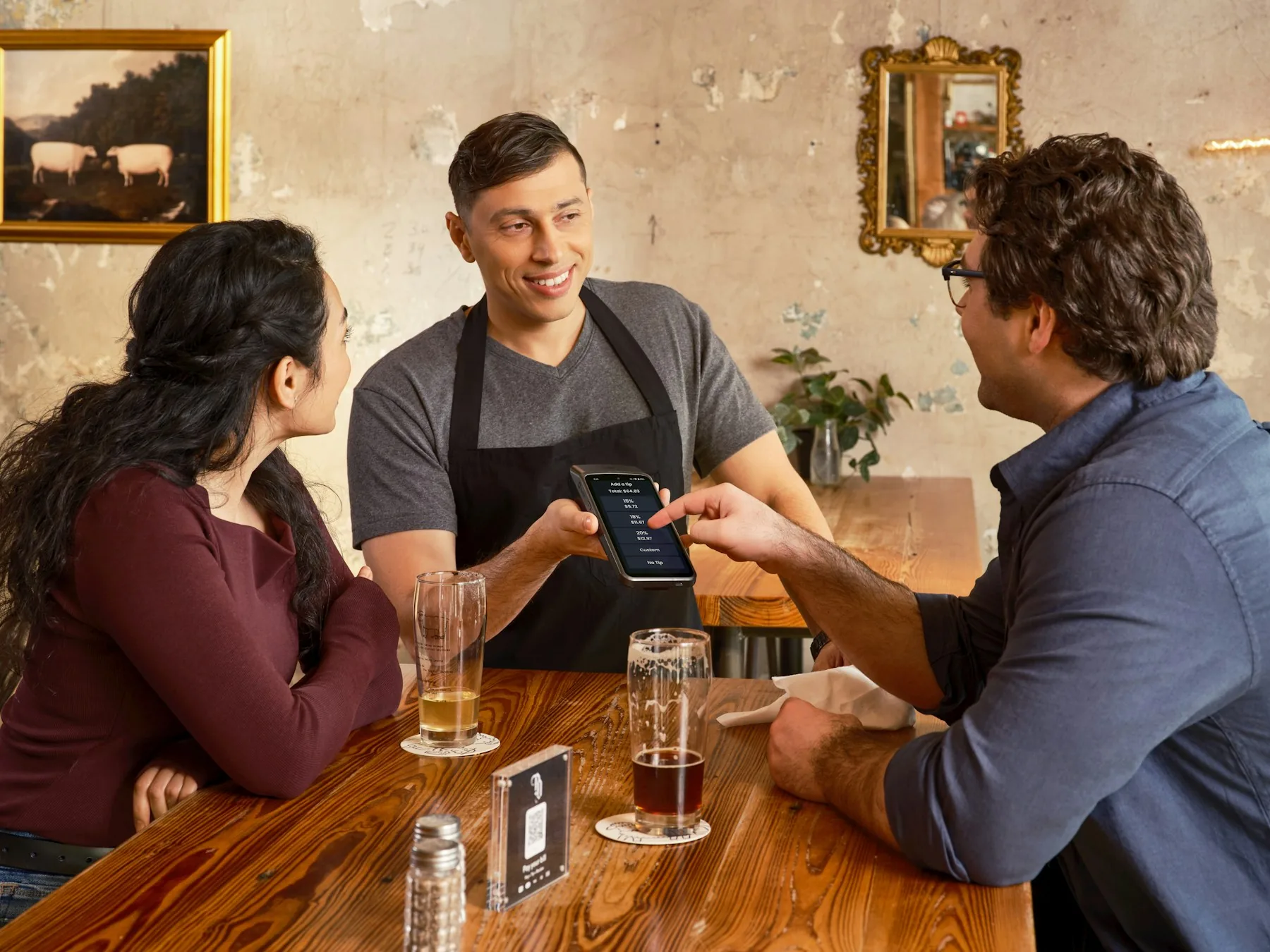
- Digital reordering and payment at the table
When the solution suits the buying situation, it can remove time that customers do not want to spend. Research into restaurant technology indicates, among other things, that tabletop technology can shorten the ordering and payment process while giving customers greater control. Studies of kiosks also show that ease of use, speed, menu design and perceived security all have a major effect on satisfaction and willingness to use the solution again.
Cornell has investigated: Studies of tabletop technology in full-service restaurants found benefits in the form of shorter table times, less routine work and greater customer control. The technology supported service; it did not prove that staff should be removed altogether.
A kiosk study found: Research into customers' intention to reuse self-ordering kiosks found that satisfaction and their experience of the system are central to repeat use. Saving the restaurant time is therefore not enough; the system must also be easy for the customer.
In hotels, room service, airports and tourist areas, QR codes, kiosks and table tablets can also provide language support for staff. The same menu can explain dishes, options and allergens in more languages than a team can realistically speak. This frees staff from routine translation, but the translations must be quality-checked and customers must still be able to ask a person for help.
A poor digital solution is therefore not efficient self-service. It is simply a new queue.
Technology does not remove the kitchen bottleneck
A restaurant may receive digital orders faster than the kitchen can produce them. The wait is then merely shifted from the till to collection.
Before introducing QR ordering or kiosks, a restaurant should therefore determine:
- How many orders the kitchen can handle every 15 minutes
- Whether the system can manage or delay the flow of orders
- How customers are given a realistic waiting time
- Who identifies errors and special requirements
- How additional orders from the same table are combined
- What happens when the network or payment system fails
The technology must work for the entire operation, not just the front of house.
HORESTA notes: In the organisation's member survey, 66 per cent of restaurants expected AI and technology that optimises operations and menus to become more important. The wording matters: technology should optimise the operation, not merely move the work or the waiting time elsewhere.
When does a waiter create real value?
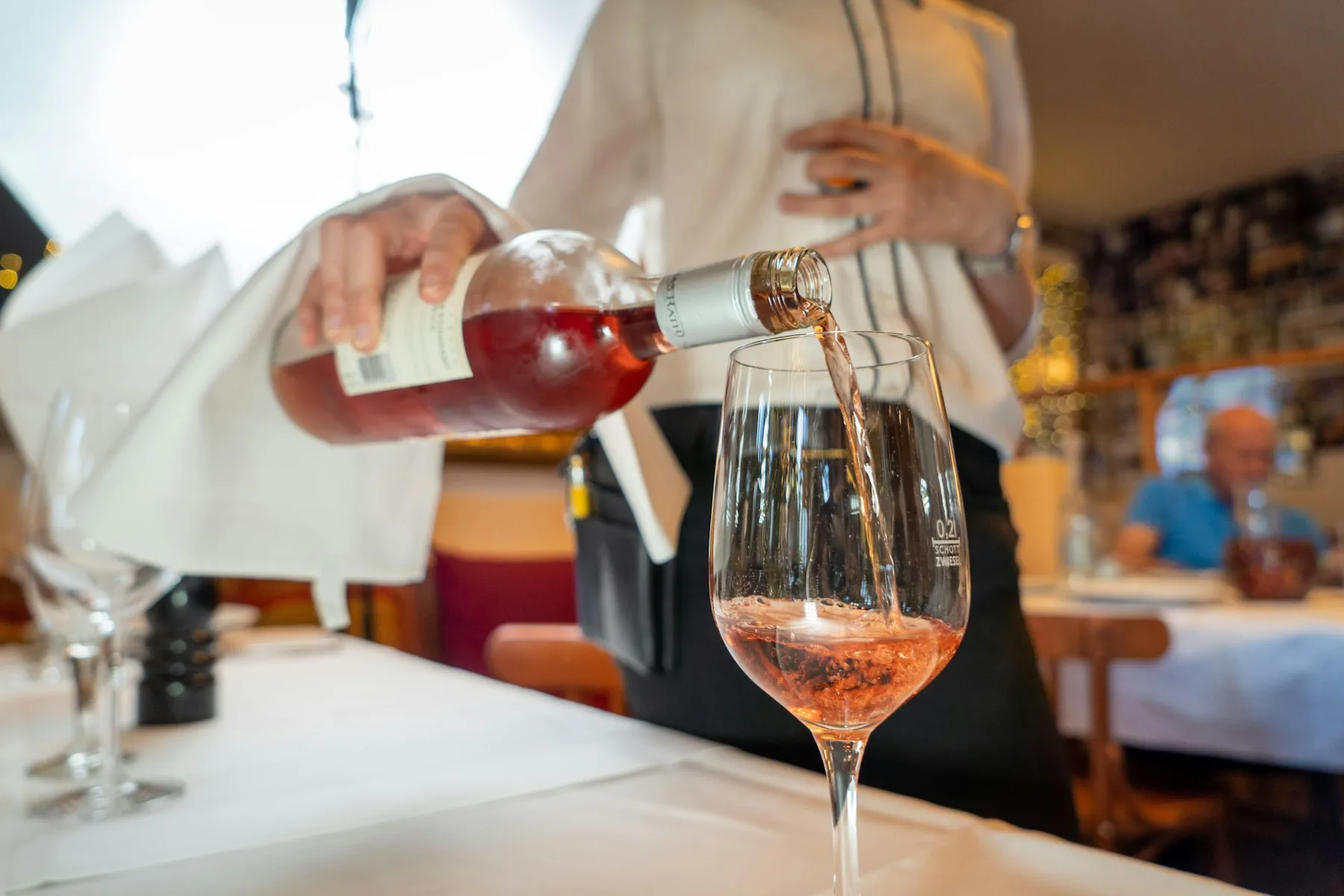
A skilled waiter can do things an ordering screen cannot:
- Read the occasion and pace of a party
- Explain unfamiliar dishes
- Handle allergies and uncertainty
- Recommend wine, accompaniments and the order of service
- Resolve problems before they become complaints
- Create a sense of hospitality and personality
The higher the price, complexity and ambition of the experience, the more important the human role will typically become.
A tasting menu, wine bar or restaurant with many unfamiliar products can undermine its concept by leaving too much to a screen. Even here, however, payment and simple repeat orders can be digital if that frees up time for the service customers actually value.
A hybrid model is often the strongest option
The choice does not have to be between full table service and a restaurant with no staff.
A hybrid model might work like this:
A host welcomes customers and explains the concept.
Customers order and pay by phone or at the bar.
Staff serve, clear tables and check in with customers.
Customers can reorder without waiting.
A member of staff is clearly available to answer questions.
Routine work is removed without removing hospitality.
The key is not to use self-service as an excuse to remove all human assistance. A customer with an allergy, impaired vision, payment difficulties or an aversion to digital systems must still be able to receive service.
Match the service model to the buying situation
| Situation | Most suitable model |
|---|---|
| Airport, station and quick lunch | Kiosk, QR or mobile ordering - or quick ordering at the bar - with immediate payment and a clear collection process |
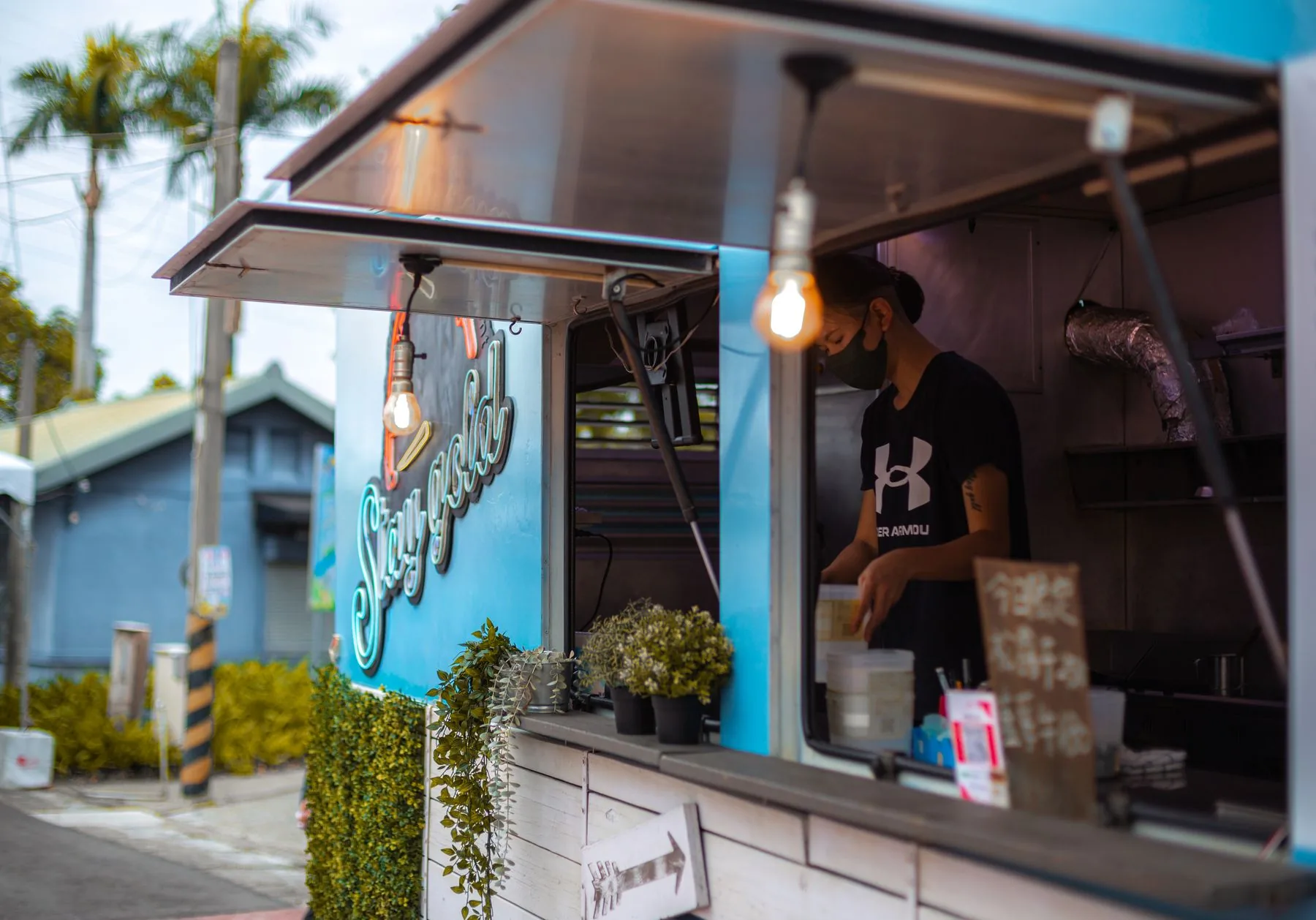
| Street food and fast casual | Kiosk, QR or bar ordering with a visible host |
| Family and casual dining | Hybrid: a personal welcome, digital reordering and payment |
| Wine bar and specialist menu | A waiter provides advice; payment can be streamlined digitally |
| Fine dining and tasting menus | Human service as a central part of the product |
| Large parties | Pre-ordering, fixed choices and one clear point of contact |
At airports and stations, a kiosk will often be the strongest primary channel because it can serve many walk-in customers without requiring them to use their own phones. QR ordering is better suited to seated customers, while mobile pre-ordering is relevant for commuters and others collecting at a specific time. A staffed till or bar should offer help and an alternative, not create another compulsory queue.
The service model should follow the customer's needs, not the restaurateur's fascination with technology.
The practical differences in equipment, economics and buying situations are covered in the guide Kiosk, table tablet or QR: Which type of self-service suits your restaurant?
How to test the model in your restaurant
Do not change the entire restaurant at once. Run the test for a limited period or in a defined area.
Measure before and after:
- Time from arrival to order placement
- Errors and remakes
- Average transaction value and repeat orders
- Time spent on payment
- Staff hours per 100 orders
- Customer satisfaction and complaints
- Kitchen ticket times
If ordering becomes faster but the kitchen queue and complaints increase, the project is not a success.
Conclusion: Remove the transaction, not the hospitality
A restaurant does not necessarily need a waiter for every part of the visit. It needs the customer's requirements to be met.
In some concepts, personal guidance is part of what the customer pays for. In others, the best service is to let customers order and pay without waiting. The commercially strongest solution is often to automate the transaction and use staff where people make a genuine difference.