When the restaurant is full and customers are waiting at the door, the calculation appears simple: shorter visits mean more parties and higher revenue.
In practice, the relationship is less straightforward. Cornell research has shown that the revenue gain from shortening meals is often far smaller than the naive assumption that a 20 per cent reduction in table time will produce roughly 20 per cent more revenue.
Cornell ran the simulations: Across more than 1,200 restaurant scenarios, the average revenue gain from shorter meals was less than a quarter of what the simple rule of thumb predicted. Faster table times can have value, but the effect should not be budgeted as an automatic proportional gain.
A customer who stays longer and buys wine, dessert and coffee may be more valuable than one who leaves quickly. If customers feel they are being rushed out, the restaurant may gain a table tonight but lose a return visit.
The objective should therefore not be the shortest possible visit. It should be:
Remove waiting and wasted time without taking away the time customers experience as part of the meal.
Start by finding the time nobody wants
A restaurant visit has several stages:
Arrival and seating
Reading the menu and choosing
Ordering
Production and service
The meal itself
Finishing, receiving the bill and paying
Clearing and resetting for the next party
If the restaurant measures only total table time, it cannot see where the problem occurs.
The most obvious place to start is the time that customers do not enjoy either: waiting for a menu, to place an order, for the bill and for the opportunity to pay.
Payment is often an unnecessary final queue
Once customers have decided to leave, every extra minute causes frustration. Possible measures include:
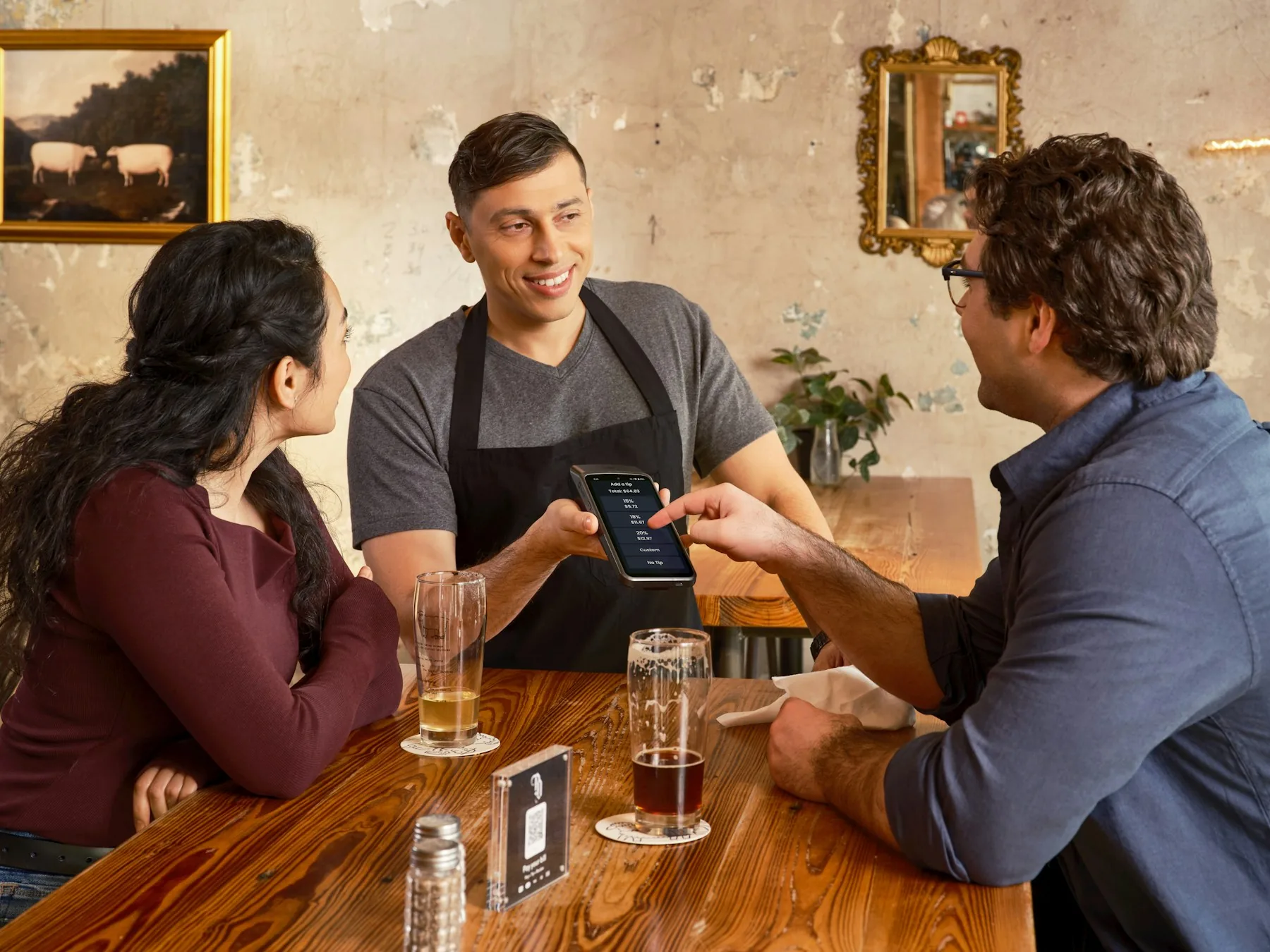
- Bring the payment terminal when presenting the bill
- Offer QR payment without requiring an app or account
- Allow customers to split the bill digitally
- Prepare the bill when customers decline dessert and coffee
- Give one clearly designated member of staff responsibility for closing the visit
Restaurant technology can shorten this part of the visit and give customers greater control. But it must be an option, not a digital obstacle course.
Cornell has investigated: Studies of tabletop technology found that customers particularly valued greater control over ordering and payment. This suggests that the best time savings are often found in the service process, not by shortening the meal itself.
Make choosing easier
A long and confusing menu slows both the customer and the kitchen. That does not mean every restaurant should offer only five dishes. It means the menu should help customers choose.
The restaurant could, for example, use:
- Clearly identified signature dishes
- A shorter lunch menu during peak periods
- Set menus and combinations
- A menu included with the booking confirmation
- Pre-ordering for larger parties
- Specific recommendations from staff
If customers need 30 dishes explained to them, the problem is not that they are choosing too slowly. It is that the restaurant has designed a slow decision.
Table mix may matter more than hard chairs
A restaurant can have a queue at the door and still use its seats poorly. Two customers at a fixed table for six create a capacity problem even if they eat quickly.
Flexible two-person tables that can be combined often provide a better fit for different party sizes. Counter seating and bar tables can also be natural places for shorter visits.
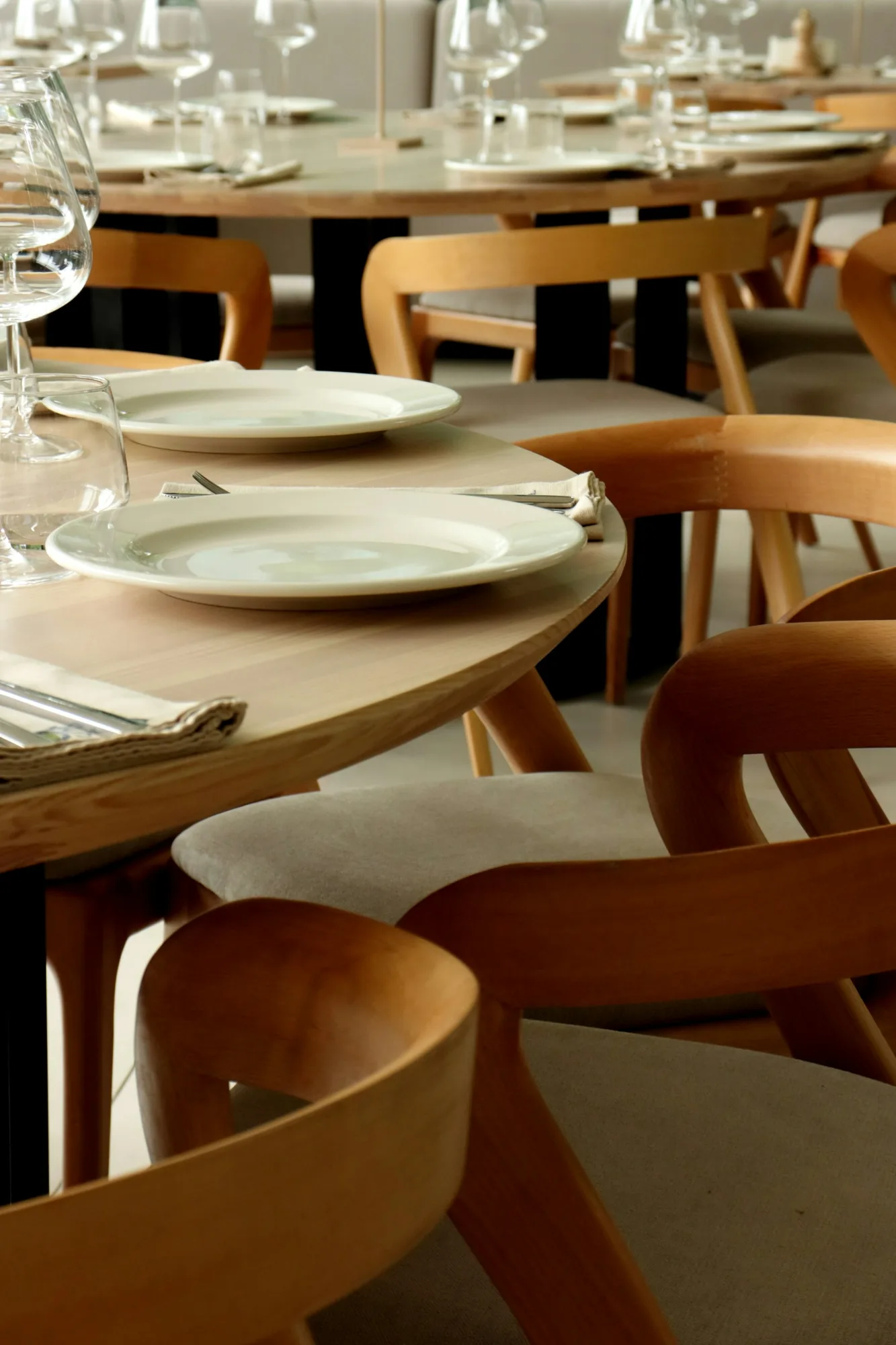
Hard chairs are often suggested as a way to accelerate table turnover. The hypothesis is understandable, but we have not found strong evidence that hard chairs alone create a healthy commercial effect. A deliberately less lounge-like interior may suit a fast-paced concept, but discomfort should never be the strategy itself.
Time limits should be a promise, not a surprise
A table can be sold for a defined period, especially in busy restaurants. But the time limit must:
- Be stated clearly at the time of booking
- Suit the menu and party size
- Include a buffer for the restaurant's own delays
- Be enforced politely and consistently
- Primarily be used when the table is actually booked again
If the kitchen is running 25 minutes late, the restaurant cannot reasonably recover all that time from the customer.
Measure more than the number of table turns
The relevant measure is not simply how many parties have occupied the table. Also track:
- Revenue or contribution margin per available seat hour
- Average transaction value
- Actual visit duration by party size
- Time from arrival to ordering
- Time from the last item served to payment
- Time from departure until the next party is seated
- Errors, complaints, reviews and repeat visits
In revenue management, revenue per available seat hour is often called RevPASH. The metric connects price and time, making it more useful than table turnover alone.
Cornell's teaching model recommends: A restaurant visit can be divided into stages so that management can identify delays without harming the experience. The same model considers RevPASH, table mix, reservations and demand, not merely the number of table turns.
The viral story about mobile phones
A frequently repeated story claims that a New York restaurant compared surveillance footage from 2004 and 2014 and discovered that mobile phones and photography had almost doubled customers' table time.
The story came from an anonymous internet post that was later deleted. The restaurant, footage and methodology could not be verified. It may provide a starting point for discussing distraction, but it is not evidence that mobile phones are the restaurant's capacity problem.
Measure the actual customer journey instead of blaming the phone.
Conclusion: Make the visit flow, not feel uncomfortable
The strongest route to faster table turnover is rarely harder chairs, louder music or staff watching the clock.
Start with the changes that benefit both customer and restaurant: a quick welcome, easier choices, reliable production, simple payment and a reset team that prepares the table immediately.
Only after the unnecessary waiting has been removed does it make sense to adjust reservation times, table mix and length of stay.