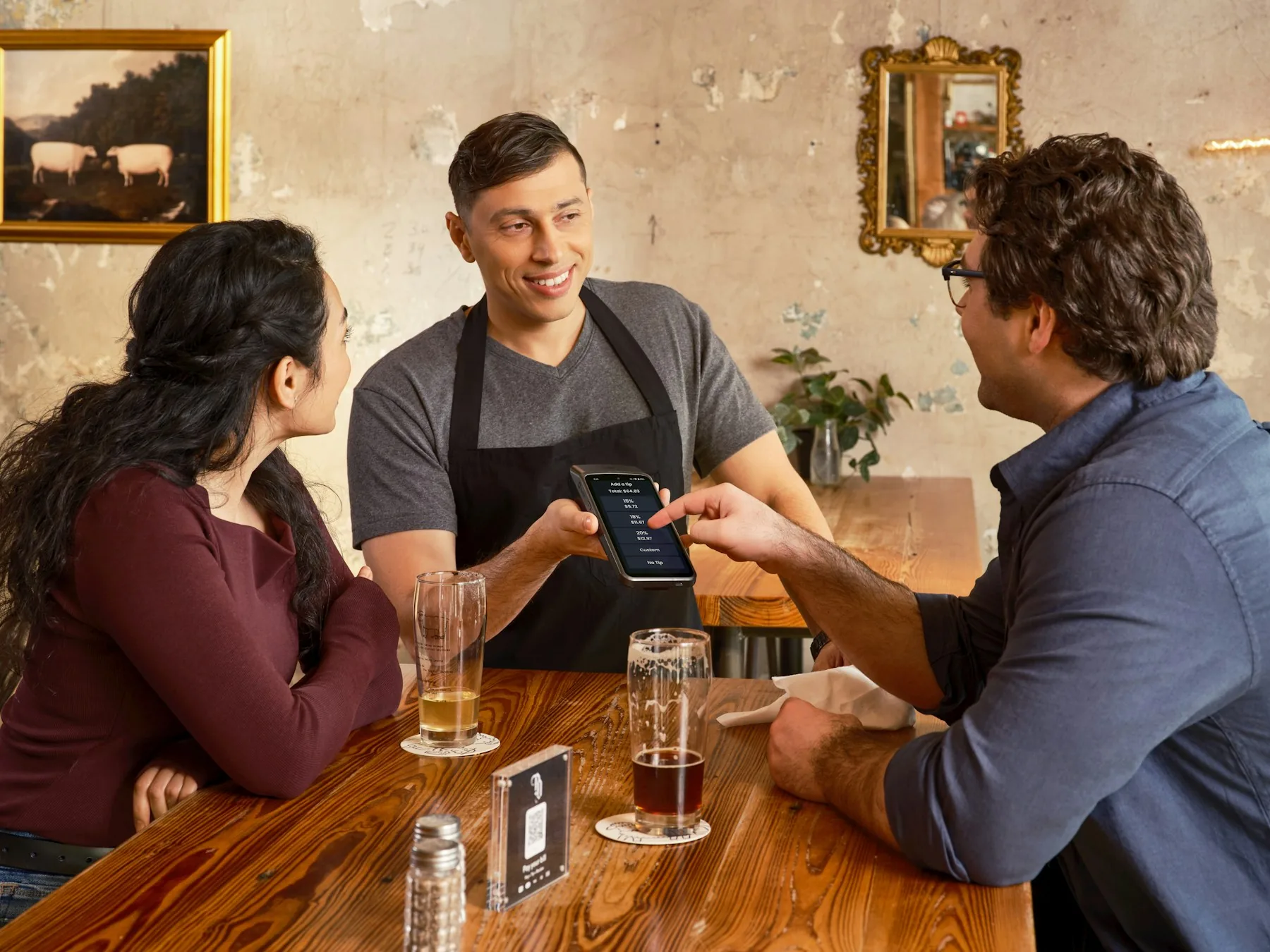
A good waiter does more than take an order and carry plates. They help customers discover products that can improve the meal while also increasing the restaurant's revenue.
That might be an aperitif, an extra side dish, a better-matched glass of wine, dessert, coffee or a digestif.
But upselling has a poor reputation for a reason. When staff mechanically push the same product on everyone, the restaurant may increase today's average transaction value while reducing customers' desire to return.
The right definition is therefore:
Upselling is good service when the recommendation is relevant to the customer. It becomes poor service when the restaurant's sales target is more apparent than the customer's needs.
A brief recommendation can change sales
Field experiments involving verbal sales prompts have shown that a simple recommendation can significantly increase sales of side dishes, particularly when the product is a natural match for the main course. The point is not the exact percentage from one particular type of restaurant. It is that staff do not need to deliver a lengthy sales pitch.
A field experiment found: Researchers examined verbal sales prompts in fast-food restaurants and found that a relevant recommendation could increase sales of side dishes. The effect was particularly interesting when the side dish was a natural match for the chosen main product.
‘Would you like dessert?’ is almost an administrative question. It gives customers a very easy opportunity to say no.
A useful recommendation is more specific:
‘The warm apple tart takes about 12 minutes. Shall I put one on for you to share?’
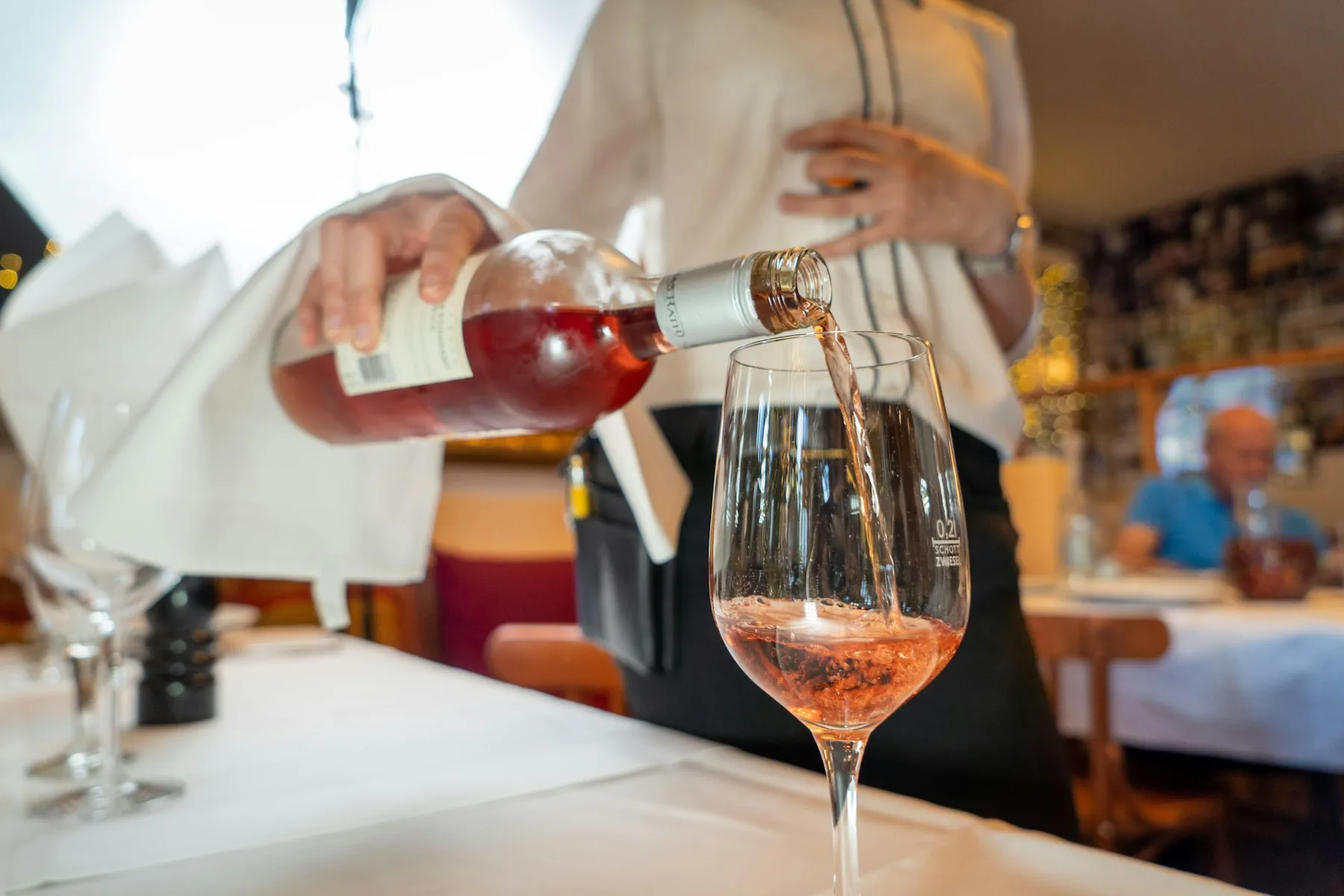
‘Our fresh Riesling works better with that dish than the house white. Would you like to try a glass?’
‘If you would like a lighter finish, I would recommend the lemon dessert rather than the chocolate one.’
The recommendation contains a product, a reason and an easy next step.
Staff cannot sell what they do not know
Before introducing competitions and bonuses, the restaurant must give staff the tools to succeed.
They need to know:
- What the product tastes like
- What it pairs well with
- How long it takes
- What it costs
- Which customers it is relevant to
- Which common questions and objections arise
A weekly sales focus can be introduced in 15 minutes:
Choose one focus product.
Let everyone taste it.
Explain the relevant customer and occasion.
Prepare two natural phrases.
Practise the phrases on each other.
Share the wording that actually works.
Measure sales, customer reactions and errors.
Product knowledge and training come before the prize.
A restaurant experiment found: A study of waiting staff used goals, feedback and positive reinforcement around recommendations for cocktails, starters and desserts. This supports a structured training model rather than simply asking staff to ‘sell more’.
Is commission-based pay an overlooked option?
Commission-based pay has not disappeared from the Danish restaurant industry. HORESTA and 3F's 2025-2028 collective agreement still includes commission-based remuneration under the relevant provisions. Among other things, it describes a commission of 13.1 per cent of generated revenue including VAT and a guaranteed hourly wage.
HORESTA and 3F state: The current collective agreement specifies 13.1 per cent of generated revenue including VAT and a guaranteed hourly wage. From 1 March 2026, the guaranteed hourly rate listed under the relevant provision is DKK 181.15. Its precise application must be assessed in light of the collective agreement and type of business.
It is therefore not necessarily pure commission without a safety net.
The model can create a strong focus on sales and staffing, but it also carries risks:
- Competition for attractive tables
- Reluctance to serve low-spending customers
- Aggressive upselling
- Disputes over who generated the sale
- Pressure to operate with too few staff
- A focus on revenue rather than contribution margin and repeat visits
Collective agreements, contracts and local arrangements must, of course, be clarified with the relevant organisations and advisers. A commission model should never be improvised as an informal internal competition.
Individual commission rewards only the visible part of the work
A dessert is not sold by the waiter alone. The sale also depends on:
- The kitchen's flavour and pace
- Presentation
- Product availability
- Dishwashing capacity
- The menu
- The restaurant's overall atmosphere
Pure individual commission can therefore give front of house the credit for revenue created by the whole team.
A more balanced model can combine:
- A fixed or guaranteed wage
- A shared target for the restaurant or shift
- A smaller individual component for documented improvement
- A quality threshold that must be met before a bonus is paid
For example, a bonus should not be triggered if errors, complaints or returns are rising at the same time.
Competitions should measure rate, not just volume
‘Whoever sells the most desserts wins a bottle’ is easy to understand but often unfair. The employee who serves the most customers or the most expensive tables has a clear advantage.
Better measures include:
- Highest dessert rate per relevant customer
- Greatest improvement from the employee's own baseline
- Highest contribution margin per cover
- Best combination of upselling and customer satisfaction
- A shared target for the whole shift
Competitions should be short and rotate their focus. Otherwise, the same product will be pushed on customers for whom it is not suitable.
Back of house must be included
If front of house wins prizes while the kitchen is simply expected to produce the additional revenue, management creates an unnecessary imbalance.
Back of house can be rewarded against targets that protect both quality and economics:
- A low rate of errors and remakes
- Ticket times within a defined quality range
- Less waste without key products selling out
- Accurate mise en place
- Documented suggestions for improvement
- Completed peer training
‘Fastest chef’ without a quality requirement is just as poorly designed as ‘most desserts’ without regard to customer numbers.
A simple sales dashboard
Track at least these figures:
| Metric | What it shows |
|---|---|
| Average transaction value | Whether customers are buying more overall |
| Dessert rate | Desserts per relevant cover |
| Coffee and digestif rate | Whether the end of the meal is being used |
| Contribution margin per cover | Whether the sales are actually profitable |
| Sales per labour hour | Whether staffing is generating revenue |
| Errors and returns | Whether sales pressure is harming operations |
| Complaints and repeat visits | Whether upselling is healthy in the long term |
A waiter who sells 20 desserts to 200 customers performs worse than one who sells 15 to 75.
Conclusion: Advice before pressure
The waiter's job is not to empty the customer's wallet. It is to recognise what the customer might enjoy buying and make it easy to say yes.
A restaurant does not build a strong sales culture simply by offering a bottle as a prize. It does so through product knowledge, training, relevant recommendations, fair measurements and incentives that respect both the kitchen's contribution and the customer's desire to return.